When infants die.
It’s a terrible tragedy for the family.

See Dr. Jeanne A. Rungby’s interview with Sally Clark, who explains the data on infant mortality and its implications in a highly professional manner.
Infant mortality is defined by the number of children who die within the first year of life per 1,000 births.
Normally and naturally, one would expect some infants to die immediately after birth, for example due to malformations that render the child non-viable. Thereafter, it is natural to expect a gradual decline in mortality and morbidity as the child grows larger and stronger especially when breastfed by healthy mothers.
However, researcher Sally Clark has found waves of increased infant mortality temporally associated to the implementation of childhood vaccination schedules. These data don’t allow any claims of causation, but further investigation is most warranted.
The childhood vaccination programmes are recommended by the WHO and UNICEF
Sally Clark has examined data from the Philippines and Malaysia.
The Philippine data are based on 41,7 mill births and 546,130 infant deaths
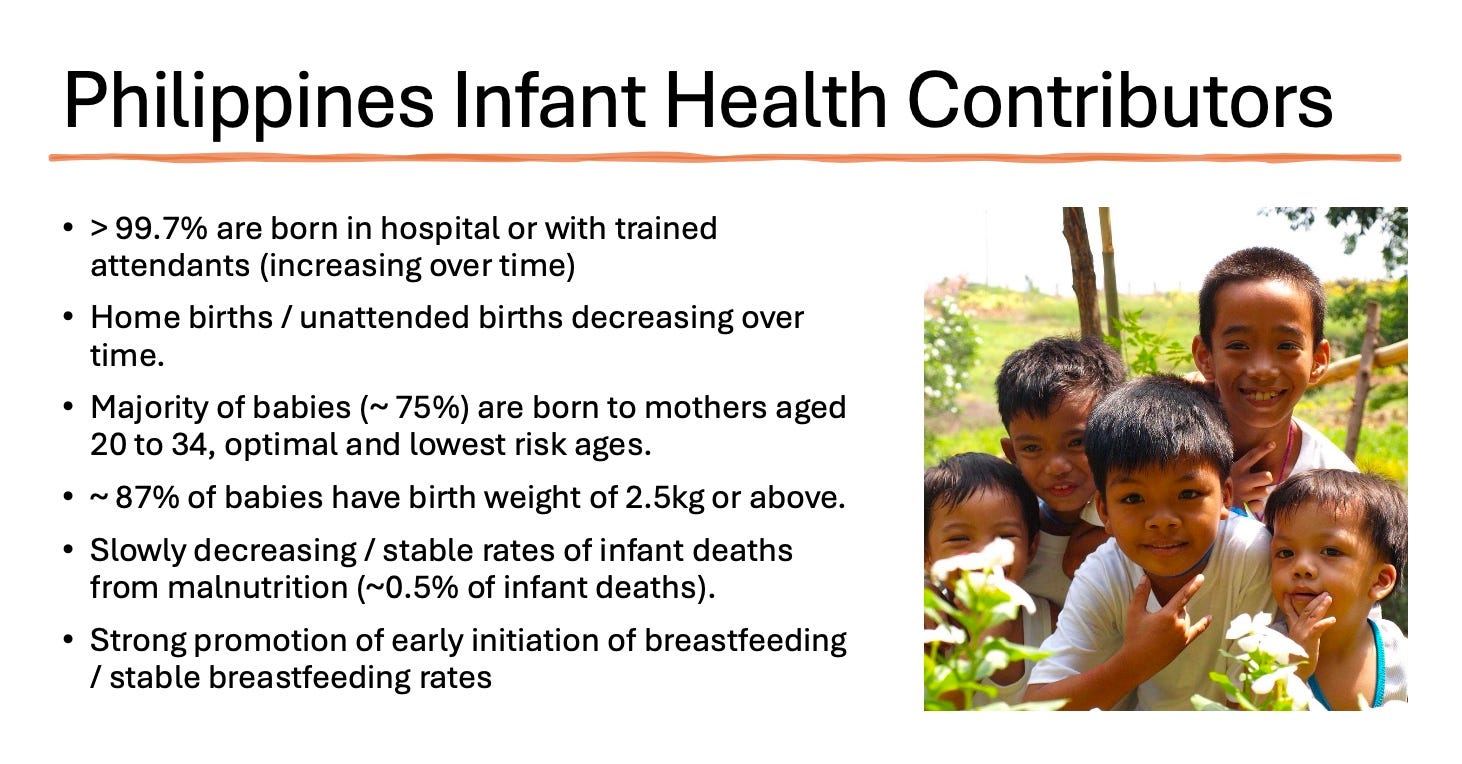
The Philippines and Malaysia seem to be the only countries in the world where data on infant mortality per month of life is readily available.
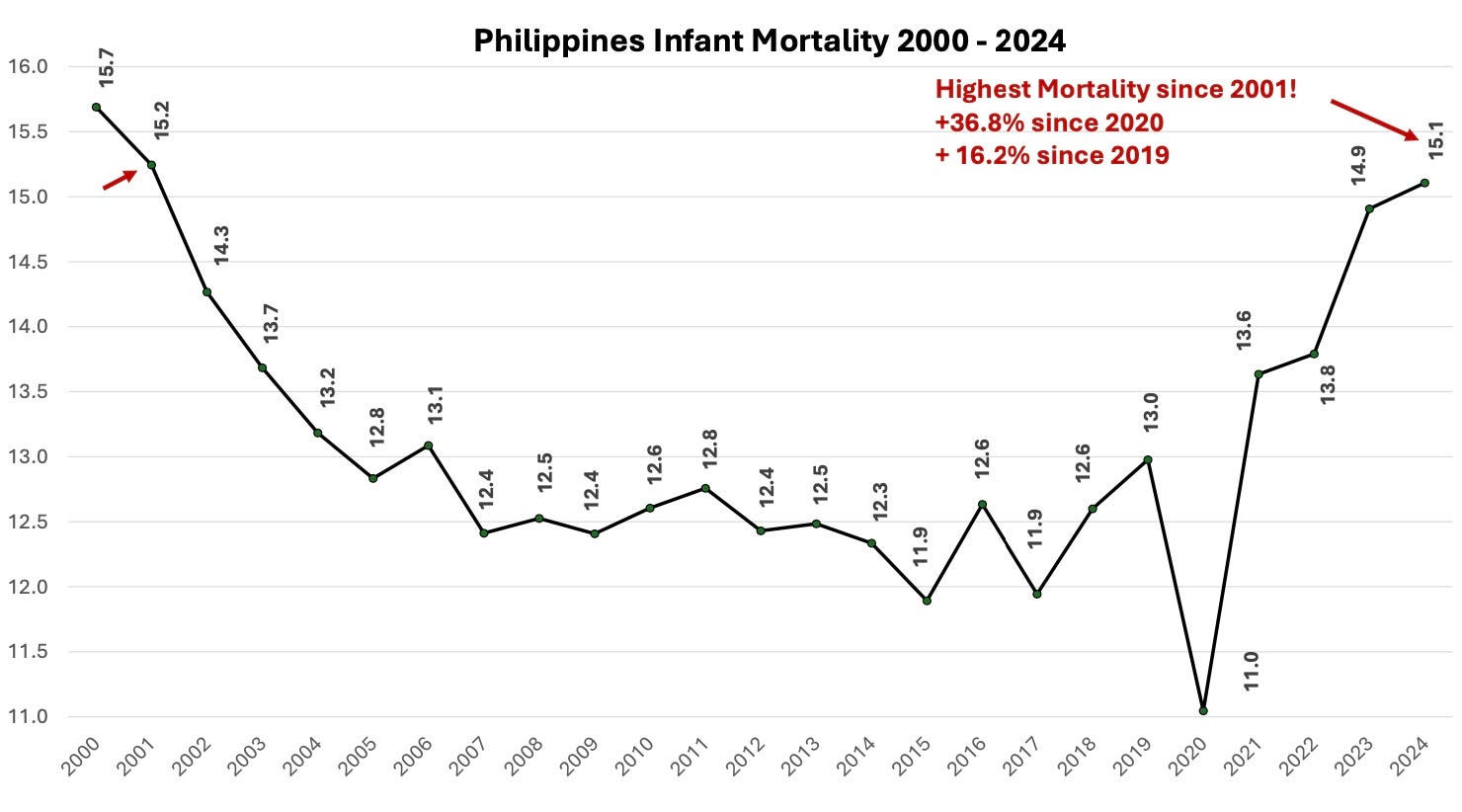
In the Philippines authorities did well achieving significant progress in reducing infant mortality from 2000 to 2017. But from 2020 through to 2024, all that progress has been lost. Infant mortality has risen markedly and significantly over these five years.
In particular, she and her co-authors have discovered that in the second month of life, there was a wave of deaths temporally linked to the first seven vaccines/antigens administered when the child is six weeks old.
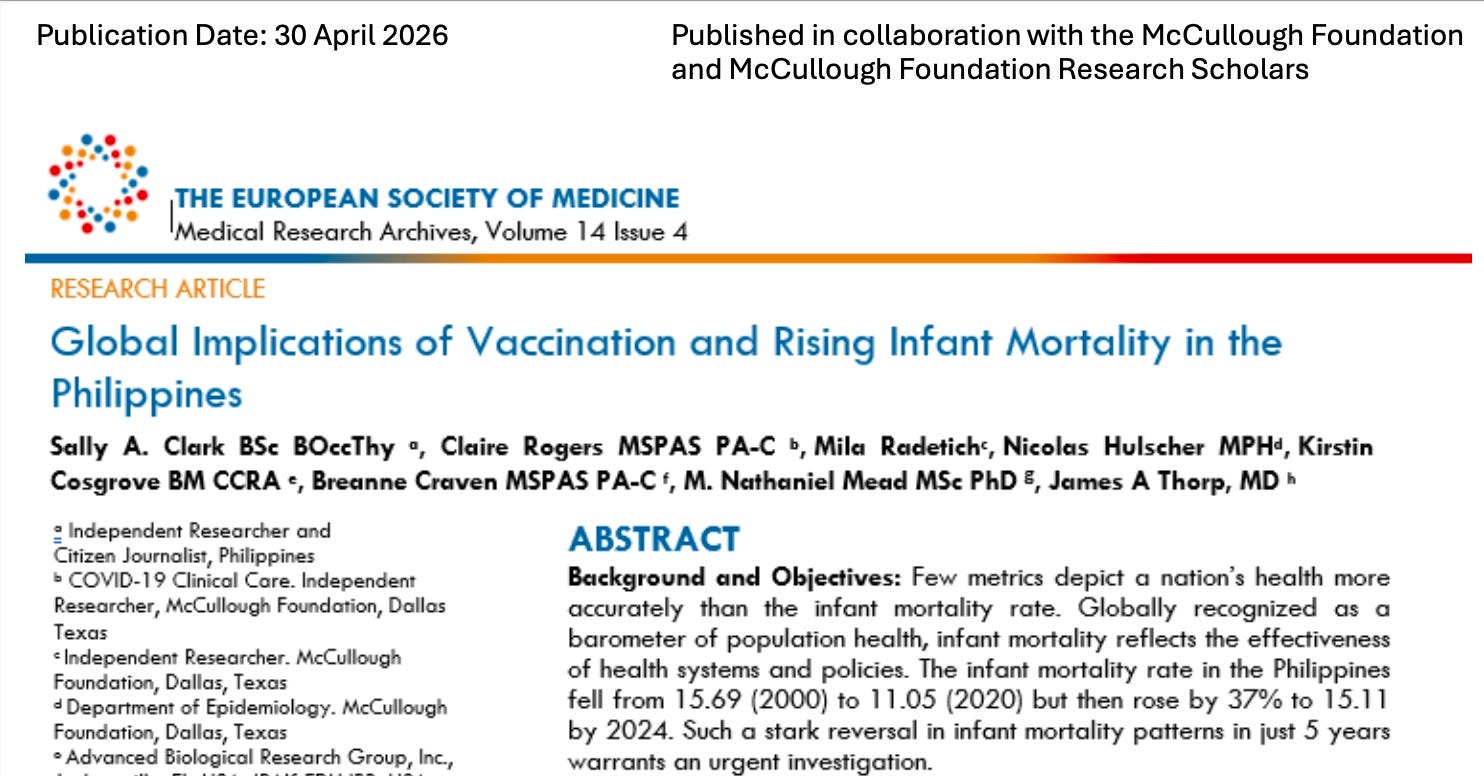
This is the peer-reviewed scientific paper:
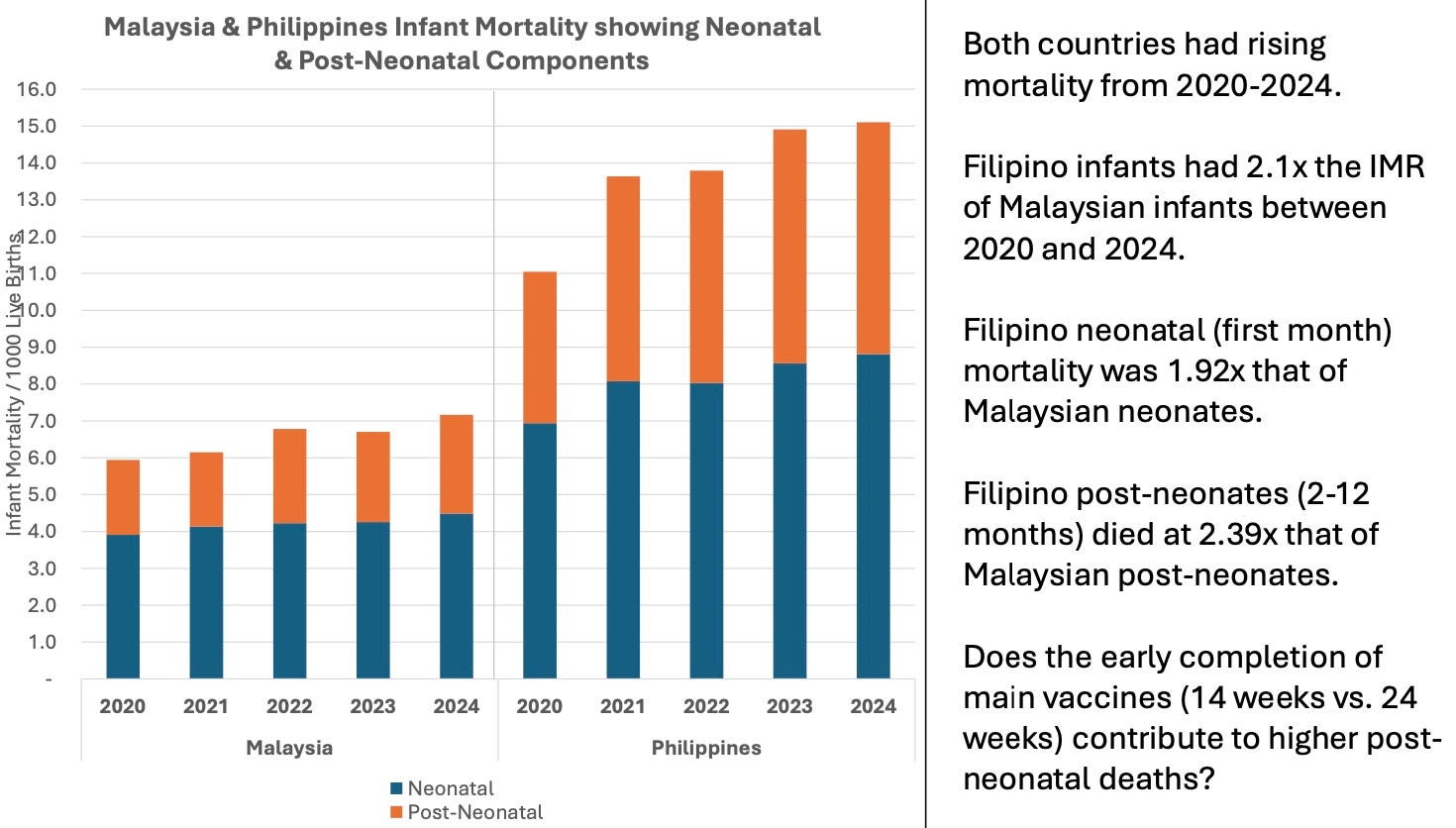
Sally Clark and coauthors have compared the Philippine data with the same data from Malaysia, where the same vaccines are administered approximately 6 weeks later and with a wider spread. Infant mortality rate(IMR) in the Philippines was more than twice the IMR in Malaysia.
In Denmark, the same vaccines are administered – with a few exceptions (hepatitis B).
If an infant is found lifeless in bed, the parents are often blamed.
It is time to take a closer look at infant mortality in relation to childhood vaccination programmes.
In particular, there appear to have been no safety assessments of the consequences of administering multiple vaccines on the same day (co-administration).
Dr Jeanne A. Rungby, MD, has interviewed Sally Clark.
Enjoy the interview:
Find Sally Clarks Substack in the link below.
References: